
 Last week, I mentioned some of the cutting edge software technologies we use at MedicaSoft that many of the giants in non-healthcare industries also use. I thought this week I’d delve a little deeper into one of those technologies – Angular.js. There are many reasons to use Angular. At MedicaSoft, we use it to improve the speed of our development process. Angular enables us to develop and build features quickly and get changes in front of our clinicians for more of their feedback, resulting in less time in between product builds and releases.
 I’ve been going to FOSS (free and open source) conferences since 2006. My first open source conference was FreedomHEC in Seattle, a little 30-person conference for Linux users to protest Microsoft’s WinHEC. My next open source conference was OSCON, which had over a thousand attendees. They were both very different conferences, and as a college student, I really didn’t know what to expect. Going to your first open source conference can be intimidating, so I’ve complied ten tips for people who are new to the conference circuit...
 The AOC grew up out of a pick-up game of sorts between the users (Air Force personnel) and the vendors (commercial and government programs). The users simply bought what they wanted, and the vendors happily took their money and installed the systems. The result was a collection of standalone systems; each came installed with its own hardware and software, and there was very little sharing of resources between them. While the team made it work through sheer willpower, it was horribly inefficient, a maintenance nightmare, not user friendly, and agility was measured in decades. Our job was to take that mess and fix it...This was my first trial-by-fire experience that showed the true resistance within the Air Force and Department of Defense (DoD) to open source software...
 Angie Nyakoon and Amanda Gbarmo Ndorbor are two outspoken and energetic women who oversee the Mental Health Unit at the Ministry of Health and Social Welfare (MOHSW) in Liberia. Together, they're applying a new open source app called mHero (that was first used to help them deal with the Ebola crisis) to the mental health issues that have arisen in the aftermath of the epidemic due to displacement and abandonment...mHero provides a trusted channel that facilitates two-way communication using SMS and interactive voice response for sending and receiving critical information to and from frontline health workers, in real time...
 Health care is no longer about us. Health care is about waste, fraud and abuse. Health care is about “bending the curve”. Health care is about global competitiveness of corporations. Health care is about carving up a $3 trillion opportunity. Health care is about private equity, mezzanine funding, return on investment, valuations and public offerings. Health care is about the economy, and the economy is no longer about us.
  It’s the year many negotiators got seriously tough on double dipping – charging for both the ability to read (via subscriptions) and for publishing (author processing charges, or APCs). Last year it was France getting tough on the toughest negotiator: Elsevier. This year, the Netherlands took it right to the brink of cutting Elsevier loose. It was summed up by a January headline: “Dutch universities dig in for long fight over open access.” Coming into the new year, other nations were taking up positions about the future they want to see too...Here’s a month-by-month roundup of some of the major action...
 Traditional monolithic EHR architectures focus on stability and standardization at the expense of agility. Along with innovation, cloud based deployment and integration of things, agility is the main differentiator when describing the requirements of application architecture for the Postmodern EHR. Achieving agility is impossible for the vast majority of healthcare applications today as they are an inseparable mix of code for user interface, decision logic, workflows and data definitions. New architectures promote agility and reuse by turning the applications inside out and layering the four types of programming into portals, rule engines, process engines and XML data. Let’s look at some examples, layer by layer:
 EHRs are a perfect example of how we took something that should revolutionize health care, and turned it into something that not only no one is happy with but that many feel often impedes care, to the point some want to go back to paper records. That's not retro, that's just stupid. We didn't do the wrong thing with EHRs, we just are doing it wrong. As I've written before, we should be thinking big and bold about how we want our health care system to work in the 21st century. We should be setting tough goals for how effectively it works for us -- and expecting to achieve them. We should be looking forward, not backward...
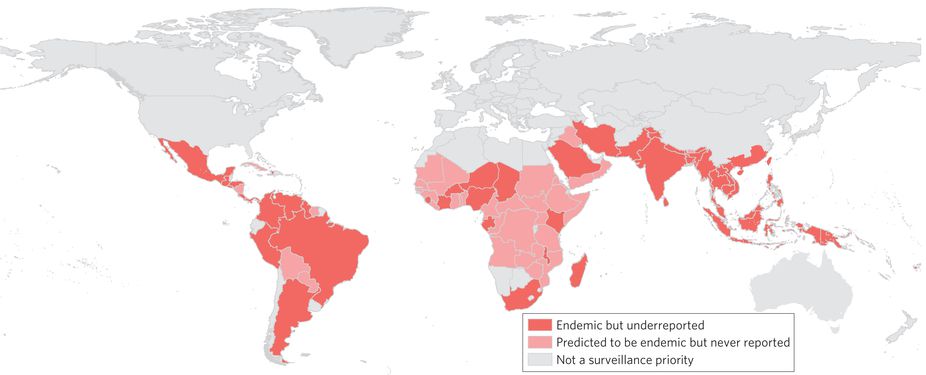 Researchers have raised the alarm about an overlooked bacterial disease that they say killed 89,000 people in 79 countries in 2015. In a paper published in Nature Microbiology last week (11 January), researchers say that melioidosis is likely to be present in most of the tropics, including 34 countries where it has never been reported.
  Open organizations explicitly invite participation from external communities, because these organizations know their products and programs are world class only if they include a variety of perspectives at all phases of development. Liaising with and assisting those communities is critical. And community calls are my favorite method for interacting with stakeholders both inside and outside an organization. In this article, I'll share best practices for community calls and talk a little about how they can spur growth...
 Cory Doctorow is good with words. He just prefers stringing them into sentences, not subroutines. "I was a software developer," he says. "I'm much better at writing science fiction novels. Like, seriously."..."There's a certain efficiency to writing code," Doctorow says. "It can be a very powerful intervention. Look at the tiny number of people who hack on Tor, and the massive impact they've had around the world. That's the upside of code." But writing code just isn't for him. One of today's most active, vocal, and recognized champions of digital rights, eschewing a programming career is rather striking. After all, if what Lawrence Lessig says is true—if, in the 21st Century, code is the fulcrum of power—then becoming a coder would seem tantamount to Doctorow's interests, what he calls the intersection of "technology and liberation"...
 Whether we like it or not, whether we realize it or not, monetization of our data is happening, While research suggests we are overwhelmingly willing to share our health information for research, once the implicit value of our contributions becomes clearer, that willingness may be more conditioned upon an explicit return. Take, for example, Datacoup. They are one of the first companies to allow consumers sell their data. Consumers upload their data to Datacoup, which then markets it to data purchasers, with the consumers getting paid based on how much those purchasers pay. Datacoup's CEO told the EIU: "If merchants are willing to provide value in exchange for more or better consumer consented data, then you’ll see a vibrant and massive marketplace spawned for the direct exchange of data, and in effect a more direct relationship between consumers and merchants."
 On behalf of the undersigned organizations, we are writing to express our concerns with the Meaningful Use (MU) program and the current state of electronic health records (EHRs). We recognize that the MU program has successfully driven the adoption of EHRs, with over 80 percent of hospitals and physicians now using these systems. We must now turn our attention to ensuring that all of the practices in our respective communities have high-functioning technology to achieve interoperability across all care settings. Yet, with the release of Stage 3, we fear the current trajectory of the MU program will hinder efforts to move forward.
 OpenMaxims, an electronic patient record (EPR) system developed in the United Kingdom (UK) and made available as open source software, is being adopted by three additional hospitals in the UK. The software solution is being implemented for the Blackpool Victoria Hospital, Clifton Hospital and Fleetwood Hospital, all three in England's northwest coast. The three hospitals form the Blackpool Teaching Hospitals NHS Foundation Trust. The Trust started implementing OpenMaxims in December.