
 Many people have asked me to review the Quality Payment Program final rule, released on October 14, 2016. Several summaries have already been written but your best bet is to rely on the CMS Quality Payment Program website at https://qpp.cms.gov. Yes, the rule is still complex - over 2400 pages, of which more than 50% is the mandated response to comments made on the proposed rule. The good news is that CMS has been very responsive to feedback, creating a transition plan for adoption, reducing the number of criteria and extending the timeline which enables iterative learning before large scale implementation. Under the Quality Payment Program, clinicians have two approaches to choose from for reimbursement: the Merit-based Incentive program (MIPS) and Advanced Alternative Payment Models (APMs)...
Feature Articles
What Is Deep Learning, and Why Should You Care About It?
 Whether it's Google's headline-grabbing DeepMind AlphaGo victory, or Apple's weaving of "using deep neural network technology" into iOS 10, deep learning and artificial intelligence are all the rage these days, promising to take applications to new heights in how they interact with us mere mortals. To go deeper (yes, I went there) on the subject, I reached out to the team at the deep learning-focused company Skymind, creators of Deep Learning For Java (DL4J), and authors of the recently released O'Reilly book Deep Learning: A Practitioner's Approach, Josh Patterson and Adam Gibson...
The Quality Payment Program Final Rule
A Doctor Leverages Open Source to Learn How to Code And Improve Medical Care in Africa
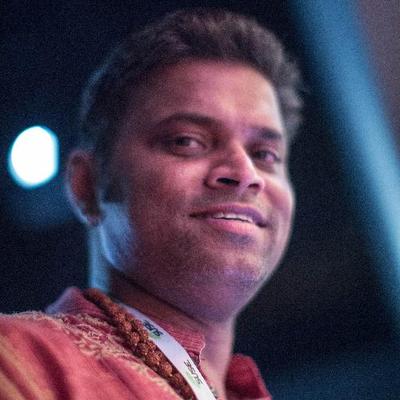 Judy Gichoya is a medical doctor from Kenya who became a software developer after joining the open source medical records project, OpenMRS. The open source project creates medical informatics software that helps health professionals collect and present data to improve patient care in developing countries. After seeing how effective the open medical records system was at increasing efficiency and lowering costs for clinics in impoverished areas of Africa, she began hacking on the software herself to help improve it. Then she set up her own implementation in the slums outside Nairobi, and has done the same for dozens of clinics since. This is a classic story of open source contributors, who join in order to scratch an itch. But Gichoya was a doctor, not a programmer. How did she make the leap?
What the History of Open Source Teaches Us About Strategic Advantage
 The free software movement started like many other movements: A group of bright, spirited people felt controlled by a greater power and rose up and took matters into their own hands. It's not that different from the American Revolution. The colonists were tired of being controlled by Great Britain, so they declared their independence and started building their own system of government and military, and creating their own cultures. The revolutionaries' methods were disorganized and improvised, but they ultimately proved to be effective. Same goes for the software revolutionaries...
Couchbase and the Future of NoSQL Databases
 Couchbase is a NoSQL, document-oriented database for building interactive applications. Trends in the open source database industry show positive growth as NoSQL is used for web, mobile, and the Internet of Things (IoT). In this interview, Arun Gupta, VP of Developer Advocacy at Couchbase, shares his views on how open source has made an impact on the database industry, and the challenges that lie ahead for the NoSQL industry. Also, find out which open source tools and methodologies Couchbase has adopted...
Dutch Parliament to Make Open Standards Mandatory
 A law proposal by MP Astrid Oosenbrug was adopted by the Dutch Parliament’s lower house yesterday. According to the MP, the open standards requirement will be one of several changes to the country’s administrative law, introduced next year. “The minister has earlier agreed to make open standards mandatory”, she said. “The parliament is making sure this actually happens.” The use of open standards will be made mandatory for public administrations.
Dispatch from Denmark
Denmark is a remarkable country of 5 million people with a robust social support system. Healthcare is provided for life as part of being Danish. If you lose your job, generous unemployment benefits provide for the ongoing well being of you and your family. Income inequality is among the lowest in the world (see the world mapped by income inequality below). When people gather together in Denmark, there is a sense of common purpose and shared experiences. The Danish call this “hygge” or coziness. I spoke about the experiences of the Meaningful Use program, the evolving US reimbursement system, and the quest for innovation - especially in the areas of social networking for healthcare, mobile, analytics, and cloud hosting...
When Artificial Intelligence Robots Start Replacing Physicians, Will We Notice -- Or Care?
 There's an interesting verbal battle going on between two prominent tech venture capitalists over the future of AI in health care. In an interview in Vox, Marc Andreessen asserted that Vinod Khosla "has written all these stories about how doctors are going to go away...And I think he is completely wrong." Mr. Khosla was quick to respond via Twitter: "Maybe @pmarca [Mr. Andreessen] should read what I think before assuming what I said about doctors going away." He included a link to his detailed "speculations and musings" on the topic. It turns out that Mr. Khosla believes that AI will take away 80% of physicians' work, but not necessarily 80% of their jobs, leaving them more time to focus on the "human aspects of medical practice such as empathy and ethical choices"...
How Percona Has Built a Successful Open Source Business Based on Support and Services Revenues
 The open source community is a diverse and fractious collection of individuals and organizations. In its infancy, in many ways it could be compared to the hippie movements of the '60s: a lot of passion, a lot of fun, a lot of weirdness, and not a lot of organization. Over the last decade or so, it has evolved into a respected software development force that relies on the support of its members. As it's grown and diversified over the last decade, it has gotten more mainstream in the sense that there are now many different players that are making quite a bit of money based on open source principles. It has more prestige and a lot more respectability. As they say, money changes everything...
Why Public Libraries Need to Support Open Source
 People turn to public libraries for answers, and a lot of times libraries are superb at providing them. But when it comes to providing answers about open source, libraries have an uneven track record. What can we do to make this better so that more people can turn to their public library to learn about open source software, hardware, and principles? Right now, if you walked into my public library and pelted me with questions about open source—like, "What is it?" "How does it work?" "How can I use open source?"—I'd rattle off answers so fast you'd be walking out with a new tool or technology under your belt. Open source is a big world, so of course there are some things I don't know, but guess what?...
A Guide to Building Trust in Teams and Organizations
 My travels globally have given me a feeling for how best to work in many different contexts—like Latin America, West Africa, North Africa, and Southeast Asia, to name a few. And I've found that I can more easily adapt my work style in these countries if I focus on something that plays a role in all of them: trust. In The Open Organization, Jim Whitehurst mentions that accountability and meritocracy are both central components of open organizations. Trust is linked to both of those concepts. But the truth, I've found, is that many people don't have the information they need to determine whether they can trust a person or not. They need data, along with a system to evaluate that data and make decisions...
Open Source Drives Companies to Change Hiring and Development
 "Do I want to play with this open source thing?" This was the question most people asked 20 years ago when I started reviewing PostgreSQL bug fixes and assembling like-minded database colleagues to help start the PostgreSQL Global Development Group. It's mind-blowing to see how much things have changed. Today, not becoming a follower of some open source community almost means you're cobaling yourself—excluding yourself from the reality of how organizations use open software today. As engineers, we always want to keep up with the latest technologies not only to satisfy our desire to create and innovate, but also to remain marketable in a business world where products and technology constantly evolve. What's happened with the open source movement is different...
Why Implanted Medical Devices Should Have Open Source Code
 As medical implants become more common, sophisticated and versatile, understanding the code that runs them is vital. A pacemaker or insulin-releasing implant can be lifesaving, but they are also vulnerable not just to malicious attacks, but also to faulty code. For commercial reasons, companies have been reluctant to open up their code to researchers. But with lives at stake, we need to be allowed to take a peek under the hood. Over the past few years several researchers have revealed lethal vulnerabilities in the code that runs some medical implants.
Solving Design Problems in Healthcare Starting with the Waiting Room
A few days ago ProPublica had a headline I wished I'd written: If It Needs A Sign, It's Probably Bad Design. Although the article started with a health care example (EpiPen of course, citing Joyce Lee's brilliant post), it wasn't focused on health care -- but it might as well have been. Health care is full of bad design, and of signs. Take, for example, the waiting room. When most patients enter a provider's office or facility, the first thing they are likely to see is a waiting room. The waiting room probably has other would-be patients already waiting there, each full of their own health concerns. In some instances, the initial waiting room is merely a staging area; once processed, patients may be sent to yet another waiting room to wait some more. And, of course, once they eventually do reach an exam room, they'll probably endure some more waiting, no matter how long their wait has already been...
OpenShift Commons Gathering Event Preview
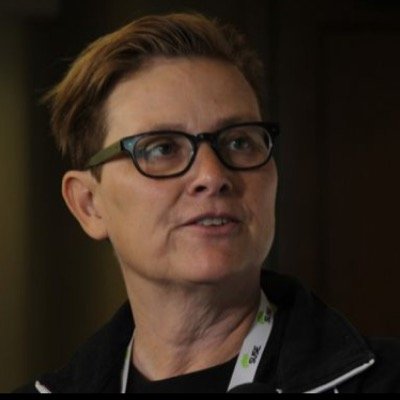 We're just two months out from the OpenShift Commons Gathering coming up on November 7, 2016 in Seattle, Washington, co-located with KubeCon and CloudNativeCon. OpenShift Origin is a distribution of Kubernetes optimized for continuous application development and multi-tenant deployment. Origin adds developer and operations-centric tools on top of Kubernetes to enable rapid application development, easy deployment and scaling, and long-term lifecycle maintenance for small and large teams. And we're excited to say, the 1.3 GA release of OpenShift Origin, which includes Kubernetes 1.3, is out the door! Hear more about the release from Lead Architect for OpenShift Origin, Clayton Coleman...