
Feature Articles
Mozilla Contributor Creates Diabetes Project for the Masses
 I recently founded my own open source project, Glucosio, to bring open source diabetes management and research software to the masses. My years of contributing to open source projects and observing various structures has really come in handy being a project leader now. I'm very excited about the future of Glucosio, but most importantly about the future open source and how that will play out in health and medicine. There is a lot of potential for software innovation in healthcare, and I think we will soon see a startup disrupt healthcare and medicine with open source solutions...
Analyze, Collaborate, and Share Research with Open Source Tools
 The most powerful free and open source (FOSS) statistics program, though, is R. Originally a FOSS version of the statistics language S, R has shown explosive growth over the last few years, with some 7,000 add-on packages available to handle nearly any statistical requirement and an increasing number of books, courses, and blogs (e.g. R-bloggers) focusing on practical usage. Some websites concentrate specifically on how to use R for psychological research—an example is William Revelle's Personality Project, which also offers an R package called psych, a toolbox for personality, psychometrics, and experimental psychology...
Using Open Source APIs to Ceate Secure Health IT Solutions
 In the Healthcare, world trust is the basis for all interactions. The Patient-Doctor relationship is the primary example of Trust and is probably the most important relationship in Health. As Health goes digital it is essential that we bring trust with us into the digital world. One of the big challenges is to do this without the trust process becoming either intrusive or limiting. The issue of trust has been a critical component I have been focused on as we design the next generation of BlueButton for Medicare beneficiaries: BlueButtonOnFHIR.
Using the Open Source Way to Solve the Innovation Problem
 A couple of weeks ago a Chief Digital Officer (CDO) of one of the largest mobile telecommunications companies in the world asked me how a large organization such as hers should think about organizing itself to maintain control over costs and risks while still giving their global organization the freedom to innovate...When asked if I had any insights from my work with other large global organizations, it occurred to me the ideal model she is seeking is very aligned to how an Open Source project like Drupal is managed (a subject I have more than a passing interest in).
Four PLOS authors receive 2016 Breakthrough Prize in Life Sciences
 Through the Breakthrough Prize – initiated and funded in 2012 by Bay Area biotechnology innovators, social media venture capitalists and successful internet entrepreneurs – outstanding scientists working in the fields of life sciences, fundamental physics and mathematics receive recognition, money and a bit of glamour. This year, four of the five scientists awarded a $3 million Breakthrough Prize in Life Sciences chose to publish some of their work in Open Access journals over the course of their careers. In so doing, Edward S. Boyden, Karl Deisseroth, John Hardy and Svante Pääbo ensure their research is available for distribution, discovery and reuse, introducing opportunities for all scientists to build on their discoveries...
Google's Release of TensorFlow Could be a Game-changer in the Future of AI
 The development of smarter and more pervasive artificial intelligence (AI) is about to shift into overdrive with the announcement by Google this week that TensorFlow, its second-generation machine-learning system, will be made available free to anyone who wants to use it. Machine learning emulates the way the human brain learns about the world, recognising patterns and relationships, understanding language and coping with ambiguity. This is the technology that already provides the smarts for Google’s image and speech recognition, foreign language translation and various other applications. This is valuable technology, and it is now open source; the source code is freely available and can be modified, developed in new directions and redistributed in the same way that the Linux operating system is open.
Can Smartphone Apps and EHRs Transform Mental Health Care?
 Our relationship with technology is not unidirectional. We use it, and it changes us. But it cannot alter fundamental realities regardless of how hopeful Americans are or how much faith we have in it. More and better technology is not a substitute for adequate funding and coordinated planning, especially when we’re talking about the very significant funding issues around behavioral health. Sure, we can get excited about the newest app and the latest EHR functionality, but we must also maintain a focus on meeting the needs of the mental health professionals committed to keeping our fellow citizens from falling through the cracks. Even while there is no magic in technology, there is also no reason to believe we can’t fix a broken mental health system through hard work, empathy and thoughtful planning. Time and again, our faith in those principles has been rewarded.
Naturopathic Physicians and the Veterans Administration
 AMVETS, one of the country's largest veterans service organizations, has teamed up with the American Association of Naturopathic Physicians (AANP) to promote natural, non-pharmacological approaches to treating veterans suffering from chronic pain. In a Dear Colleague letter in the U.S. House of Representatives, lawmakers have called on the Department of Veterans Affairs (VA) to take steps to employ licensed naturopathic physicians, who are trained in natural, non-invasive methods of healing. Congressman Mark Pocan (D-WI), concerned about the dangers of overmedicating veterans, especially with prescribed opioid drugs, has penned a letter that many colleagues have signed including Representatives Julia Brownley (D-CA), Suzan DelBene (D-WA), Earl Blumenauer (D-OR), Raul Grijalva (D-AZ), and Walter Jones (R-NC) as the letter's initial signators.
Crisis Communication: Saving Time and Lives in Disasters through Smarter Social Media
 As the worst bushfires seen for generations in New South Wales raged across the Blue Mountains, Southern Highlands and the Central Coast two years ago, people urgently needed fast, reliable information – and many turned to their phones to get it. The NSW Rural Fire Service was prepared with a smartphone app, Fires Near Me, which was downloaded almost 200,000 times. At the height of the fires, its Facebook page was recording more than a million views an hour. A social media campaign also helped the NSW Rural Fire Service Facebook community more than double from 120,000 to 280,000, while its Twitter reach jumped from 20,000 to 37,000 followers. Crucially, this helped to alert people to danger areas and places to avoid driving near...
Alfred Hitchcock and the Future of Health IT
 Health IT is like the early Beatles. There are some really great applications out there, and in theory they should help to improve the lives of those that use them. In practice, there are a number of fundamental flaws that stem from not fully understanding the power of the technology that is used to present solutions to doctors and patients. We need to be more like Alfred Hitchcock! We are currently at the “elbow” of an exponential growth curve of mobile, connected applications. For a mobile application to be successfully in this new world, it needs to fully embrace the connected mobile technology and the power that a ubiquitous high speed network, that connects to a light weight, vibrating, touch screen, GPS, an accelerometer, camera, speakerphone, microphone, Bluetooth enabled device, along with serious amounts of computing power and data (and cloud) storage.
How Computers Broke Science – and What We Can Do To Fix It
 For most of the history of science, researchers have reported their methods in a way that enabled independent reproduction of their results. But, since the introduction of the personal computer – and the point-and-click software programs that have evolved to make it more user-friendly – reproducibility of much research has become questionable, if not impossible. Too much of the research process is now shrouded by the opaque use of computers that many researchers have come to depend on. This makes it almost impossible for an outsider to recreate their results. Recently, several groups have proposed similar solutions to this problem. Together they would break scientific data out of the black box of unrecorded computer manipulations so independent readers can again critically assess and reproduce results. Researchers, the public, and science itself would benefit.
Killer Care: How Medical Error Became America's Third Largest Cause of Death, And What Can Be Done About It
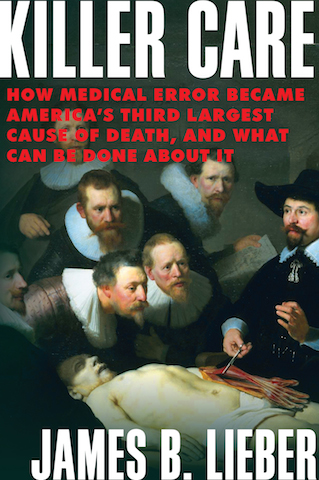 ...The following year, researchers shook the profession with an article in Health Affairs entitled “‘Global Trigger Tool’ Shows that Adverse Events in Hospitals May be Ten Times Greater than Previously Measured.” Dr. David Classen, who did the seminal research for global triggers, served as lead author of the study, which looked at three mid-size to large (ranging from 550 to 1,000 beds) teaching hospitals associated with medical schools in the West and Northwest that participated on the condition of anonymity...When different detection methods were applied, global triggers found over 90 percent of events, the government’s Patient Safety Indicators (based on discharge summaries) found 8.5 percent, and voluntary reporting disclosed only 2 percent (afraid of censure and malpractice, doctors and nurses seldom willingly self-accuse). Classen, et al. warned: “reliance on voluntary reporting and the Patient Safety Indicators could produce misleading conclusions about the current safety of care in the U.S. health-care system and misdirect efforts to improve patient safety.”...
Department of Education Seeks Comments on Open Licensing Requirements
 One of the more effective ways to advance an agenda is to attach requirements to grant funding. The U.S. Department of Education has an interest in broadening the impact of its grants, so it announced a notice of proposed rule making (NPRM) on October 29. The proposed rule would require intellectual property created with Department of Education grant funding to be openly licensed to the public. This includes both software and instructional materials...
My Phone Says I've Looked Better
 Current AI can sift through millions of photos to pick you out of a crowd, with varying degrees of success. Camera angles, make-up, hats, quality of image all factor into how successful such software is. Given the recent rapid rates of improvement, though, these are bumps in the road, not insurmountable barriers. Other software can process your facial expressions, allowing them to make some good guesses about your emotions. If you are a marketer, or a law enforcement officer, this information might be gold, but if your privacy is important, it might be a scary invasion. Someone is always watching. What I want to know is when this AI can tell if I look sick.
Halamka on the November HIT Standards Committee
 The November HIT Standards Committee included a comprehensive review of the CMS Meaningful Use Stage 3/Modification Rule and the ONC 2015 Certification Rule.
We begin the meeting with a presentation from Robert Anthony of the Meaningful Use Stage 3 and Modification Rule. A robust discussion followed. Issued raised as those similar to the ones I identified in previous blog posts. The main concern was the alignment of the CMS Meaningful Use rule with future pay for performance criteria that will be part of MACRA/Merit-based Payment Incentive programs.