
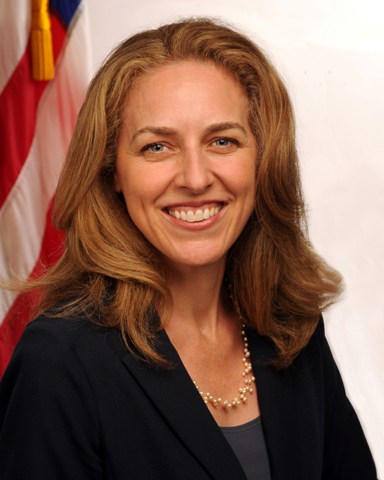
 Every spring, our team in the HHS IDEA Lab gears up for our biggest event of the year: the Health Datapalooza. It’s an annual celebration of the power of data that was started by my predecessor, Todd Park, in 2010. This year, we were honored to hear from an extraordinary lineup of leaders from private industry, academia and the federal government, including Vice President Biden. I thought I’d share excerpts from three of my colleagues’ speeches, to give people a sense of the scope and depth of the discussions.
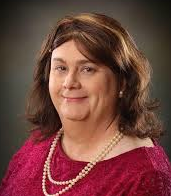 In her Day 2 OSCON keynote, Dana set out reminding us that Type I diabetes, suffered by millions of people around the world, is incredibly complicated to manage...The solution is an artificial pancreas, which acts to close that loop by monitoring and adjusting insulin levels, just as the normal pancreas does. But those devices are not yet available on the commercial market, and won't be for some years yet. Enter the OpenAPS project (Open Artificial Pancreas System); find it here on GitHub. "OpenAPS is a simplified Artificial Pancreas System (APS) designed to automatically adjust an insulin pump's basal insulin delivery to keep blood glucose (BG) in a safe range overnight and between meals"..
 Danese Cooper, head of open source for PayPal, spoke to during the Day 2 OSCON morning keynotes about the sustainability of open source, mixing in some of the history of open source as well as her own sage advice. She started on a high note. We have won! But this comes with some interesting challenges. We now have a whole new wave of people coming in to participate, but they are not "battle tested," as she calls it. The group of people that have gone before, who have seen open source start, falter, struggle, and finally win, have passion for open source. Many newcomers do as well but they are also more intent on the money in open source...
 It was just a typical, mundane day at school, when I happened to bump into my friend, Sheng Liang, who asked me if I was interested in participating in a competition with his friend, Li Quan. Sheng Liang has an entrepreneurial and competitive mindset, someone we usually see busy with some sort of idea or competition. So I was intrigued by his proposal. He told me about the "SIA App Challenge"—an app development competition from Singapore Airlines (SIA)—with a grand prize trip to Silicon Valley...
 The open source file sharing ecosystem accommodates a large variety of projects, each supplying their own solution, and each with a different approach. There are a lot of reasons to choose an open source solution rather than commercial solutions like Dropbox, Google Drive, iCloud, or OneDrive. These solutions offer to take away worries about managing your data but come with certain limitations, including a lack of control and integration into existing infrastructure. There are quite a few file sharing and sync alternatives available to users, including ownCloud and Pydio...
 Back in 2009, our day-to-day life at Planio was writing software for clients. Client work is often fun, but there can also be a feeling that you're stuck on a hamster wheel of endlessly churning through projects, always looking for new customers. We used Redmine, an open source project management tool built using the Ruby on Rails framework, to manage these projects. And then something curious started happening. We'd wrap up a project and our client would come to us asking if we'd consider letting them keep the project management tool...
 One occasionally runs into a company trying to build an open source project out of an existing product. This is a nuanced problem. This is not a company that owns a project published under an open source license trying to also ship a product of the same name (e.g. Docker, MySQL), but the situation shares many of the same problems. Neither is this a company building products out of open source projects to which they contribute but don't control (e.g. Red Hat's RHEL). This is a company with an existing product revenue stream trying to create a project out of the product...
 As a community we are capable of working together to achieve greater things. If we marshal our resources to work together, I believe we can unlock the cure for cancer. This is a rare opportunity. We need to change the models and shift our culture towards collaboration. We can’t just tweak around the edges — patients and their families can’t afford to wait. An alternative system, where all publicly-funded research and data are required to be shared would allow authors to unlock their content and data for re-use with a global audience, and co-operate towards new discoveries and analysis.
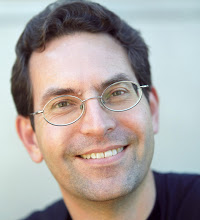 In my blog posts, I speak from the heart without a specific political or economic motivation. Although I’ve not written about highly controversial subjects such as religion, gun control, or reproductive policy, some of the topics in my posts can be polarizing. Such as was the case with MACRA. Some agreed with my initial analysis that clinicians will have a hard time translating complex MACRA payment processes into altered clinical behavior. Others felt I was overharsh, negative and inappropriate. It’s never my intent to criticize people, instead I want encourage dialog about ideas. In that spirit, here’s my opinion on how we should evolve from fee for service to pay for value/outcomes...
 Experts often compare how slowly the health care system is "reforming" to how hard it is to turn a battleship. They're so big that they can't turn on a dime (much less on $3 trillion!), and there is as much risk in trying to oversteer as in not turning at all. Things are changing, we're assured, but it will take time to get on the desired new course. Maybe. But maybe it is time to jump off the obsolete battleship onto something more nimble. Some call it Do-It-Yourself Health (there are both .org and .com sites devoted to the topic, among others). PwC declared it to be one of the top ten trends of 2015. Dave Chase believes that "DIY health reform is now leading the way for the highest performing reform" -- not Medicare, health insurers, not even employers...
 The Health Information Technology for Economic and Clinical Health (HITECH) Act provided providers with a significant financial incentive to increase the adoption and use of EHRs. EHR vendors were required to conduct and report on a summative usability evaluation of their system as part of the Stage 2 Meaningful Use program (The ONC 2014 Edition Certification). However, a recent report funded by the Agency for Healthcare Research and Quality (AHRQ), identified several “issues” with the certified EHR vendors in the processes, practices and use of standards and best practices with regard to usability and human factors.